
IDENTIFICATION OF PRODUCT/SERVICE उत्पाद/सेवा की पहचान
PRODUCT:
उत्पाद:
A product is anything that one receives in an exchange. The product can be an idea, service, goods or any combination of these three.
उत्पाद वह है जो किसी विनिमय में प्राप्त होता है। यह एक विचार, सेवा, वस्तु या इनका मिश्रण हो सकता है।
According to Philip Kotler, “A product is anything that can be offered to a market for attention, acquisition, use or consumption that might satisfy a want or need”.
Philip Kotler के अनुसार, “उत्पाद वह है जिसे बाजार में ध्यान आकर्षित करने, उपयोग या उपभोग के लिए प्रस्तुत किया जाता है जो किसी आवश्यकता या इच्छा को पूरा कर सकता है”।
Stanton defined “a product is a complex of tangible and intangible attributes including packaging, colour, price, manufacturers’ prestige and manufacturers’ and retailers services, which buyer may accept as offering for the satisfaction of wants or needs”.
Stanton के अनुसार, “उत्पाद ठोस और अमूर्त गुणों का समूह है जिसमें पैकेजिंग, रंग, मूल्य, निर्माता की प्रतिष्ठा और सेवाएं शामिल होती हैं, जिन्हें ग्राहक अपनी जरूरतों की पूर्ति के लिए स्वीकार करता है”।
IDENTIFICATION AND SELECTION OF PRODUCT/SERVICE
उत्पाद/सेवा की पहचान और चयन
Product Identification
उत्पाद की पहचान
In entrepreneurship, the identification of a product or service is the first and most critical step in starting a new business. It involves selecting, defining and understanding what an entrepreneur plans to offer to the market in order to solve a problem or satisfy a need.
उद्यमिता में, उत्पाद या सेवा की पहचान एक नया व्यवसाय शुरू करने का पहला और सबसे महत्वपूर्ण चरण है। इसमें यह तय करना शामिल है कि उद्यमी बाजार में क्या पेश करेगा जिससे किसी समस्या का समाधान हो या आवश्यकता पूरी हो।
It refers to the process of discovering, selecting and clearly describing the product or service that a business will offer.
यह उस प्रक्रिया को दर्शाता है जिसमें उत्पाद या सेवा को खोजा, चुना और स्पष्ट रूप से परिभाषित किया जाता है।
The goal is to find a viable idea that is marketable, feasible and profitable.
उद्देश्य ऐसा विचार ढूंढना है जो बाजार योग्य, संभव और लाभदायक हो।
The product should be innovative, solve a real problem and be aligned with market needs. A clear understanding of the product/service helps in building a strong business foundation.
उत्पाद नया होना चाहिए, वास्तविक समस्या का समाधान करना चाहिए और बाजार की जरूरतों के अनुसार होना चाहिए। इससे मजबूत व्यवसाय की नींव बनती है।
Steps in identifying a product/New product development stages
उत्पाद पहचान के चरण / नए उत्पाद विकास के चरण
- Idea generation refers to systematic search for new product ideas. Idea sources: internal and external.
- विचार उत्पन्न करना नए उत्पादों के विचार खोजने की प्रक्रिया है। इसके स्रोत आंतरिक और बाहरी दोनों होते हैं।
Idea generation is the process of creating, developing and communicating ideas which are in an abstract, concrete or visual form.
विचार उत्पन्न करना एक प्रक्रिया है जिसमें विचारों को बनाना, विकसित करना और प्रस्तुत करना शामिल है।
It includes the process of constructing through the idea, innovating the concept, developing the process and bringing the concept to reality.
इसमें विचार को विकसित करना, नया बनाना और उसे वास्तविकता में बदलना शामिल है।
- Idea screening means nothing else than filtering the ideas to pick out good ones.
- विचार छंटाई का मतलब अच्छे विचारों को चुनना और बाकी को हटाना है।
- Concept development and testing: The product concept is a synthesis or a description of a product idea that reflects the core element of the proposed product. Concept testing helps companies avoid investing in bad ideas and at the same time helps them catch and keep outstanding product ideas.
- अवधारणा विकास और परीक्षण: उत्पाद की अवधारणा उस विचार का विवरण है जो उत्पाद के मुख्य तत्व को दर्शाता है। यह खराब विचारों से बचने और अच्छे विचारों को चुनने में मदद करता है।
- Market strategy: Marketing strategy is created in three steps
- बाजार रणनीति: इसे तीन चरणों में बनाया जाता है
Identify in which market will the new product concept can be sold
यह पहचानना कि उत्पाद किस बाजार में बेचा जाएगा
Identify the price at which new product concept will be sold
उत्पाद का मूल्य तय करना
Identify how much new product concept will be sold in the long term
लंबे समय में बिक्री का अनुमान लगाना
- Technical and marketing development: Technical development processes vary greatly according to the type of product.
- तकनीकी और विपणन विकास: यह उत्पाद के प्रकार पर निर्भर करता है।
For a product with a complex manufacturing process, there is a lab phase to create specifications and an equally complex phase to develop the manufacturing process.
जटिल उत्पादों के लिए पहले प्रयोगशाला में परीक्षण किया जाता है और फिर उत्पादन प्रक्रिया विकसित की जाती है।
For a service offering, there may be new processes requiring new employee skills or the delivery of new equipment.
सेवा के लिए नई प्रक्रिया और कौशल की जरूरत होती है।
- Test marketing and validation: The objective is to test all the variables in the marketing plan including elements of the product.
- परीक्षण विपणन: इसमें उत्पाद और मार्केटिंग योजना का परीक्षण किया जाता है।
Test marketing represents an actual launching of the total marketing program, done on a limited basis.
यह सीमित स्तर पर उत्पाद को लॉन्च करने जैसा होता है।
- Commercialization: The first thing to be done at this stage is determining the time when new product concept will be commercialized or introduced to the market.
- व्यवसायीकरण: इस चरण में तय किया जाता है कि उत्पाद कब बाजार में लाया जाएगा।
Then, at which scale or capacity, new product concept will be introduced to the market formally i.e., at a small scale such as a city, medium scale such as a region, or at a big scale such as the national market or the international market.
फिर यह तय किया जाता है कि इसे छोटे, मध्यम या बड़े स्तर पर लॉन्च किया जाएगा।
This stage requires patience on the part of the entrepreneur and is the beginning of the recovery of the investment made by the entrepreneur in the form of return from the sale of the product.
इस चरण में धैर्य की जरूरत होती है और यहीं से निवेश की वापसी शुरू होती है।
Importance of identification of product for starting a project:
परियोजना शुरू करने में उत्पाद पहचान का महत्व:
It defines the purpose of the project
यह परियोजना का उद्देश्य तय करता है
It guides in planning and development
यह योजना बनाने में मदद करता है
It enables in market research and customer analysis
यह बाजार और ग्राहकों के विश्लेषण में मदद करता है
It supports resource identification and allocation
यह संसाधनों की पहचान और उपयोग में सहायक होता है
It helps in cost estimation and budgeting
यह लागत और बजट तय करने में मदद करता है
It improves team coordination
यह टीम के समन्वय को बेहतर बनाता है
It attracts investors and stakeholders
यह निवेशकों को आकर्षित करता है
It lays the foundation for marketing
यह विपणन की नींव रखता है
It reduces project risks
यह जोखिम कम करता है
It makes monitoring and evaluation easier
यह निगरानी और मूल्यांकन को आसान बनाता है
PRODUCT LIFE CYCLE:
उत्पाद जीवन चक्र:
Products have a certain length of life. For some products, life cycle may be as short as a month, while for others it may last for quite long period.
हर उत्पाद का एक जीवन काल होता है, जो छोटा या लंबा हो सकता है।
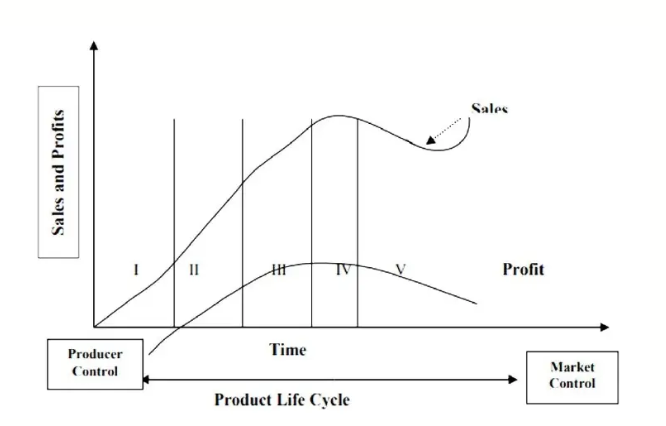
The product life cycle (PLC) is a marketing concept that describes the stages a product goes through from its introduction to its decline.
उत्पाद जीवन चक्र वह प्रक्रिया है जिसमें उत्पाद शुरुआत से अंत तक विभिन्न चरणों से गुजरता है।
STAGES OF PRODUCT LIFE CYCLE:
उत्पाद जीवन चक्र के चरण:
Stage I: INTRODUCTION STAGE
चरण 1: परिचय चरण
This is the stage when the product is developed and launched.
इस चरण में उत्पाद विकसित और लॉन्च किया जाता है।
Marketing efforts focus on building awareness and educating consumers.
इसमें ग्राहकों को जागरूक किया जाता है।
Sales are typically low and costs may be high due to initial investment in production and marketing.
बिक्री कम और लागत अधिक होती है।
The profit margins are often low or negative due to high development and marketing costs.
लाभ कम या नकारात्मक होता है।
Early adopters and innovators are the primary customers.
शुरुआती ग्राहक नए प्रयोग करने वाले होते हैं।
The business firm will be with ‘try my brand approach’.
व्यवसाय “मेरे ब्रांड को आजमाओ” रणनीति अपनाता है।
There will be less competition.
प्रतिस्पर्धा कम होती है।
Products may undergo re-adjustments based on initial feedback.
उत्पाद में बदलाव किए जा सकते हैं।
Goal: Build awareness and encourage trial.
लक्ष्य: जागरूकता बढ़ाना और उपयोग के लिए प्रेरित करना।
Strategies:
रणनीतियाँ:
Marketing and Promotion: Invest heavily in marketing campaigns to educate consumers about the product and its benefits.
मार्केटिंग: उत्पाद के बारे में जानकारी देने के लिए ज्यादा प्रचार करना।
Pricing Strategy: Consider penetration pricing or skimming pricing.
मूल्य निर्धारण: कम कीमत या ज्यादा कीमत की रणनीति अपनाना।
Rapid skimming strategy: High price and high promotion.
तेज स्किमिंग: ज्यादा कीमत और ज्यादा प्रचार।
Slow skimming strategy: High price and low promotion.
धीमी स्किमिंग: ज्यादा कीमत और कम प्रचार।
Rapid penetration: Low price and high promotion.
तेज प्रवेश: कम कीमत और ज्यादा प्रचार।
Slow penetration: Low price and low promotion.
धीमा प्रवेश: कम कीमत और कम प्रचार।
| Pricing Strategy | Launch Price of the Product | Promotions | Market Size | Market Awareness |
|---|---|---|---|---|
| Rapid Skimming | High | High | Less | Less |
| Slow Skimming | High | Low | Less | More |
| Rapid Penetration | Low | High | More | Less |
| Slow Penetration | Low | Low | More | More |
Distribution: Focus on establishing distribution channels.
वितरण: उत्पाद को बाजार तक पहुंचाना।
Customer Feedback: Gather feedback to improve the product.
ग्राहक प्रतिक्रिया: सुधार के लिए प्रतिक्रिया लेना।
Stage II: GROWTH STAGE
चरण 2: विकास चरण
Sales begin to increase as the product gains acceptance.
बिक्री बढ़ने लगती है।
Profits start to rise as economies of scale are achieved.
लाभ बढ़ता है।
Awareness increases rapidly.
जागरूकता बढ़ती है।
Competitors may enter the market.
प्रतिस्पर्धा बढ़ती है।
Gradually price may come down slightly.
कीमत थोड़ी कम हो सकती है।
The business firm will be with ‘buy my brand’ approach.
व्यवसाय “मेरा ब्रांड खरीदो” रणनीति अपनाता है।
Goal: Increase market share and capitalize on growing demand
लक्ष्य: बाजार हिस्सेदारी बढ़ाना और मांग का लाभ उठाना
Strategies:
रणनीतियाँ:
Enhanced Marketing: Continue aggressive marketing efforts, highlighting unique selling points and benefits.
उन्नत विपणन: मजबूत मार्केटिंग जारी रखें और उत्पाद के विशेष गुणों और लाभों को बताएं।
Product Variations: Introduce new features, flavours or variations to appeal to a broader audience. Enhance the product quality.
उत्पाद विविधता: नए फीचर्स, फ्लेवर या बदलाव लाकर अधिक ग्राहकों को आकर्षित करें और गुणवत्ता सुधारें।
Expand Distribution and enter new market segments: Broaden distribution networks to reach new markets and demographics.
वितरण विस्तार: नए बाजारों और ग्राहकों तक पहुंचने के लिए वितरण नेटवर्क बढ़ाएं।
Competitive Pricing: Monitor competitor pricing and adjust accordingly to maintain or grow market share.
प्रतिस्पर्धात्मक मूल्य निर्धारण: प्रतिस्पर्धियों के मूल्य पर नजर रखें और उसके अनुसार अपने मूल्य तय करें।
Stage III: MATURITY STAGE
चरण 3: परिपक्वता चरण
Sales and profits continue to increase but at decreasing rate as the product reaches widespread market acceptance.
बिक्री और लाभ बढ़ते हैं लेकिन धीरे-धीरे क्योंकि उत्पाद बाजार में फैल चुका होता है।
Competition is intense, often leading to price reductions and promotional efforts to maintain market share.
प्रतिस्पर्धा बहुत अधिक होती है जिससे कीमत कम करनी पड़ती है और प्रचार बढ़ाना पड़ता है।
Business firms may diversify or enhance the product to differentiate it from competitors.
व्यवसाय उत्पाद में बदलाव या सुधार करके उसे अलग बनाते हैं।
Supply exceeds demand.
आपूर्ति मांग से अधिक हो जाती है।
The customer base is diverse, with established loyal customers.
ग्राहकों में विविधता होती है और कुछ स्थायी ग्राहक बन जाते हैं।
Goal: Maintain market share and maximize profits.
लक्ष्य: बाजार हिस्सेदारी बनाए रखना और लाभ बढ़ाना।
Strategies:
रणनीतियाँ:
Brand Loyalty: Focus on building brand loyalty through customer engagement and loyalty programs.
ब्रांड निष्ठा: ग्राहकों को जोड़कर और योजनाओं के माध्यम से ब्रांड के प्रति विश्वास बढ़ाना।
Product Differentiation: Enhance product features or packaging to differentiate from competitors.
उत्पाद भिन्नता: फीचर्स और पैकेजिंग में सुधार करके अलग बनाना।
Cost Control: Optimize production and operational efficiencies to maintain profit margins despite potential price competition.
लागत नियंत्रण: उत्पादन और कार्यक्षमता बढ़ाकर लागत कम करना।
Targeted Promotions: Use targeted marketing campaigns to re-engage existing customers and attract new segments.
लक्षित प्रचार: विशेष ग्राहकों को ध्यान में रखकर प्रचार करना।
Stage IV: SATURATION STAGE
चरण 4: संतृप्ति चरण
Sales reach their peak and begin to stabilize.
बिक्री अपने उच्च स्तर पर पहुंचकर स्थिर हो जाती है।
The market is largely filled with consumers who are using the product.
अधिकांश ग्राहक पहले से उत्पाद का उपयोग कर रहे होते हैं।
Competition is intense, with many similar products available.
बाजार में समान उत्पादों की संख्या अधिक होती है।
Business firms may face pressure to maintain market share amidst increasing competition.
व्यवसाय को बाजार हिस्सेदारी बनाए रखने में कठिनाई होती है।
If companies successfully adapt and innovate, they may extend the product’s life cycle.
यदि कंपनियां बदलाव और नवाचार करती हैं तो उत्पाद का जीवन बढ़ सकता है।
Conversely, failure to adapt can lead to a decline as consumer interest reduces or new alternatives emerge.
यदि बदलाव नहीं किया गया तो उत्पाद की मांग घट सकती है।
Goal: Sustain sales and adapt to changing market conditions.
लक्ष्य: बिक्री बनाए रखना और बदलते बाजार के अनुसार ढलना।
Strategies:
रणनीतियाँ:
Market Segmentation: Identify niche markets or underserved segments to target with customized products or marketing.
बाजार विभाजन: छोटे या विशेष बाजारों को पहचानकर उनके अनुसार उत्पाद बनाना।
Diversification: Introduce new products or variations to attract customers and mitigate declining sales.
विविधीकरण: नए उत्पाद या बदलाव लाकर बिक्री बढ़ाना।
Partnerships and Collaborations: Explore partnerships with other brands or companies to expand reach and resources.
साझेदारी: अन्य कंपनियों के साथ मिलकर काम करना।
Sustainable Practices: Emphasize sustainable practices or eco-friendly initiatives to attract environmentally conscious consumers.
सतत विकास: पर्यावरण के अनुकूल तरीके अपनाना।
Stage V: DECLINE STAGE
चरण 5: गिरावट चरण
Sales begin to fall due to market saturation, changes in consumer preferences, or the introduction of new products.
बिक्री घटने लगती है क्योंकि बाजार भर चुका होता है या नए उत्पाद आ जाते हैं।
Business firms may reduce marketing efforts, discontinue the product, or innovate to revive interest.
व्यवसाय प्रचार कम कर सकते हैं, उत्पाद बंद कर सकते हैं या नया बदलाव ला सकते हैं।
Goal: Minimize losses and decide on the future of the product.
लक्ष्य: नुकसान कम करना और भविष्य का निर्णय लेना।
Strategies:
रणनीतियाँ:
Product Rationalization: Assess the product’s performance and consider discontinuation or phase-out strategies.
उत्पाद मूल्यांकन: उत्पाद की स्थिति देखकर उसे बंद करने का निर्णय लेना।
Cost Reduction: Implement cost-cutting measures in production and marketing to maintain profitability.
लागत कम करना: उत्पादन और मार्केटिंग में खर्च घटाना।
Focus on Innovation: Redirect resources to more profitable products and invest in innovation.
नवाचार पर ध्यान: नए और लाभदायक उत्पादों पर ध्यान देना।
Harvesting Strategy: Continue to sell the product in its remaining markets, maximizing short-term profits until sales diminish significantly.
हार्वेस्टिंग रणनीति: जब तक संभव हो उत्पाद बेचकर अधिकतम लाभ कमाना।
DOWNLOD PDF OPEN
AGEXT-221 Notes Entrepreneurship Development and Business Communication (New Syllabus – 6th Dean’s)
One thought on “CHAPTER 11. IDENTIFICATION OF PRODUCT/SERVICE उत्पाद/सेवा की पहचान”