
Disease management with chemicals, Host resistance, cultural and biological method
रोग प्रबंधन: रासायनिक विधियाँ, होस्ट प्रतिरोध, सांस्कृतिक एवं जैविक विधियाँ
Disease Management with Chemicals
रासायनिक उपायों द्वारा रोग प्रबंधन
Chemical control is one of the most effective and widely used methods for managing plant diseases. It involves the use of fungicides, bactericides, and antibiotics to prevent, reduce, or eliminate plant pathogens. Chemical disease management provides quick results and is particularly useful when disease incidence is high or when other control measures are insufficient. However, its use must be judicious to avoid environmental pollution, development of resistance in pathogens, and harmful effects on non-target organisms.
रासायनिक नियंत्रण पौध रोगों के प्रबंधन के लिए सबसे प्रभावी और व्यापक रूप से उपयोग की जाने वाली विधियों में से एक है। इसमें फफूंदनाशी, जीवाणुनाशी और एंटीबायोटिक का उपयोग किया जाता है ताकि रोगजनकों को रोका, कम किया या समाप्त किया जा सके। रासायनिक रोग प्रबंधन त्वरित परिणाम देता है और तब विशेष रूप से उपयोगी होता है जब रोग का प्रकोप अधिक हो या अन्य नियंत्रण उपाय पर्याप्त न हों। हालांकि, इसका उपयोग सावधानीपूर्वक करना चाहिए ताकि पर्यावरण प्रदूषण, रोगजनकों में प्रतिरोध का विकास और गैर-लक्षित जीवों पर हानिकारक प्रभाव से बचा जा सके।
Objectives of Chemical Disease Management
रासायनिक रोग प्रबंधन के उद्देश्य
The main objective of chemical disease management is to protect crops from infection, reduce disease severity, and increase yield and quality of produce. Chemicals can be used as preventive, curative, or eradicative measures depending on the stage of disease development.
रासायनिक रोग प्रबंधन का मुख्य उद्देश्य फसलों को संक्रमण से बचाना, रोग की तीव्रता को कम करना और उत्पादन तथा गुणवत्ता को बढ़ाना है। रोग के विकास के चरण के अनुसार रसायनों का उपयोग निवारक, उपचारात्मक या उन्मूलनात्मक रूप में किया जा सकता है।
Categories of Chemicals Used in Plant Disease Management
पौध रोग प्रबंधन में उपयोग होने वाले रसायनों की श्रेणियां
Chemicals used in plant disease management are broadly classified based on their function, mode of action, and application method.
पौध रोग प्रबंधन में उपयोग किए जाने वाले रसायनों को उनके कार्य, क्रिया विधि और उपयोग के आधार पर वर्गीकृत किया जाता है।
1. Fungicides
फफूंदनाशी
Fungicides are chemicals used to control fungal diseases. They are the most commonly used chemicals in plant disease management.
फफूंदनाशी ऐसे रसायन हैं जिनका उपयोग फफूंद जनित रोगों को नियंत्रित करने के लिए किया जाता है। ये पौध रोग प्रबंधन में सबसे अधिक उपयोग किए जाने वाले रसायन हैं।
Types of Fungicides
फफूंदनाशियों के प्रकार
a) Contact Fungicides: These remain on the surface of plant parts and prevent pathogen infection. Example: Copper oxychloride, Mancozeb.
संपर्क फफूंदनाशी: ये पौध भागों की सतह पर रहते हैं और रोगजनक के संक्रमण को रोकते हैं। उदाहरण: कॉपर ऑक्सीक्लोराइड, मैनकोजेब।
b) Systemic Fungicides: These are absorbed by the plant and move within the tissues to control pathogens. Example: Carbendazim, Metalaxyl.
प्रणालीगत फफूंदनाशी: ये पौधे द्वारा अवशोषित होकर ऊतकों में फैलते हैं और रोगजनकों को नियंत्रित करते हैं। उदाहरण: कार्बेन्डाजिम, मेटालैक्सिल।
c) Protectant Fungicides: Applied before infection to prevent disease.
संरक्षक फफूंदनाशी: संक्रमण से पहले लगाए जाते हैं ताकि रोग को रोका जा सके।
d) Curative Fungicides: Applied after infection to cure disease.
उपचारात्मक फफूंदनाशी: संक्रमण के बाद लगाए जाते हैं ताकि रोग को ठीक किया जा सके।
2. Bactericides
जीवाणुनाशी
Bactericides are used to control bacterial diseases. Common examples include streptomycin and copper compounds.
जीवाणुनाशी का उपयोग जीवाणु जनित रोगों को नियंत्रित करने के लिए किया जाता है। सामान्य उदाहरणों में स्ट्रेप्टोमाइसिन और कॉपर यौगिक शामिल हैं।
3. Antibiotics
एंटीबायोटिक
Antibiotics are used to control bacterial pathogens and some fungal pathogens. They are applied in low concentrations and are effective in controlling specific diseases.
एंटीबायोटिक का उपयोग जीवाणु तथा कुछ फफूंद जनित रोगों को नियंत्रित करने के लिए किया जाता है। इन्हें कम मात्रा में उपयोग किया जाता है और ये विशेष रोगों के नियंत्रण में प्रभावी होते हैं।
4. Nematicides
नेमाटोडनाशी
Nematicides are used to control nematode pests that cause root diseases.
नेमाटोडनाशी का उपयोग नेमाटोड के कारण होने वाले जड़ रोगों को नियंत्रित करने के लिए किया जाता है।
5. Soil Fumigants
मृदा धूमनकारी रसायन
Soil fumigants are volatile chemicals used to sterilize soil by killing pathogens, nematodes, and weed seeds.
मृदा धूमनकारी रसायन वाष्पशील रसायन होते हैं जिनका उपयोग मिट्टी को निष्क्रमित करने के लिए किया जाता है ताकि रोगजनक, नेमाटोड और खरपतवार बीज नष्ट हो सकें।
Modes of Application of Chemicals
रसायनों के उपयोग की विधियां
Chemicals can be applied in different ways depending on the type of disease and crop.
रसायनों का उपयोग विभिन्न तरीकों से किया जा सकता है, जो रोग और फसल के प्रकार पर निर्भर करता है।
- Seed treatment
- Soil treatment
- Foliar spray
- Dusting
- Drenching
बीज उपचार
मृदा उपचार
पर्णीय छिड़काव
धूल छिड़काव
सिंचन द्वारा उपचार
Colour Coding on Chemical Labels (Toxicity Classification)
रसायनों के लेबल पर रंग कोड (विषाक्तता वर्गीकरण)
| रंग पट्टी | विषाक्तता स्तर | संकेत शब्द | अनुमानित LD₅₀ (mg/kg) | सुरक्षा श्रेणी |
| लाल | अत्यधिक विषाक्त | खतरा / जहर | बहुत कम (<50) | अत्यधिक खतरनाक |
| पीला | मध्यम विषाक्त | चेतावनी | 50–500 | अधिक खतरनाक |
| नीला | कम विषाक्त | सावधानी | 500–2000 | मध्यम खतरनाक |
| हरा | न्यूनतम विषाक्त | सावधानी | >2000 | कम खतरनाक |
The labels on pesticide containers carry different colour bands indicating their toxicity level and safe usage limits. This helps farmers to understand the hazard level of the chemical and take necessary precautions.
कीटनाशकों के कंटेनरों पर अलग-अलग रंग की पट्टियां होती हैं जो उनकी विषाक्तता स्तर और सुरक्षित उपयोग सीमा को दर्शाती हैं। इससे किसानों को रसायन के खतरे का स्तर समझने और आवश्यक सावधानियां अपनाने में मदद मिलती है।
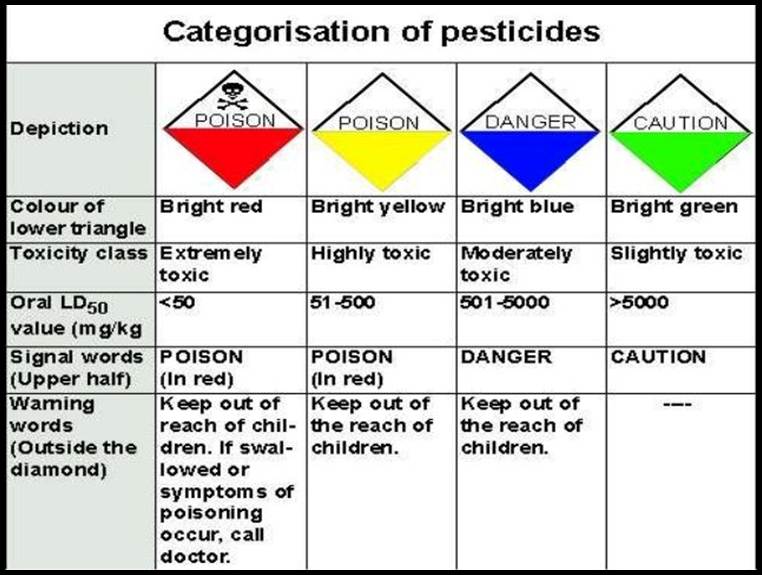
रसायनों के रंग कोड और विषाक्तता स्तर की तालिका
Advantages of Chemical Disease Management
रासायनिक रोग प्रबंधन के लाभ
Chemical control provides rapid and effective disease suppression. It is easy to apply and can protect crops during critical growth stages.
रासायनिक नियंत्रण तेज और प्रभावी रोग नियंत्रण प्रदान करता है। इसे लागू करना आसान है और यह फसल के महत्वपूर्ण विकास चरणों में सुरक्षा प्रदान करता है।
Disadvantages of Chemical Disease Management
रासायनिक रोग प्रबंधन के नुकसान
Excessive use of chemicals can lead to environmental pollution, development of resistant pathogen strains, and harmful effects on beneficial organisms. It may also leave toxic residues on crops.
रसायनों का अत्यधिक उपयोग पर्यावरण प्रदूषण, रोगजनकों में प्रतिरोध के विकास और लाभकारी जीवों पर हानिकारक प्रभाव डाल सकता है। यह फसलों पर विषैले अवशेष भी छोड़ सकता है।
Precautions in Use of Chemicals
रसायनों के उपयोग में सावधानियां
Proper dosage, timing, and method of application should be followed to ensure effective disease control and minimize risks. Protective clothing and equipment should be used during application.
प्रभावी रोग नियंत्रण और जोखिम को कम करने के लिए उचित मात्रा, समय और उपयोग विधि का पालन करना चाहिए। उपयोग के दौरान सुरक्षात्मक कपड़े और उपकरणों का प्रयोग करना चाहिए।
Host Resistance, Cultural and Biological Methods of Disease Management
होस्ट प्रतिरोध, सांस्कृतिक एवं जैविक विधियों द्वारा रोग प्रबंधन
Plant diseases can be effectively managed using eco-friendly approaches such as host resistance, cultural practices, and biological control. These methods form the backbone of sustainable agriculture because they reduce dependence on chemicals and minimize environmental hazards. They not only control diseases but also improve crop health, yield, and quality. These approaches are long-term, economical, and compatible with integrated disease management (IDM).
पौध रोगों का प्रभावी प्रबंधन पर्यावरण अनुकूल तरीकों जैसे होस्ट प्रतिरोध, सांस्कृतिक विधियां और जैविक नियंत्रण द्वारा किया जा सकता है। ये विधियां टिकाऊ कृषि की आधारशिला हैं क्योंकि ये रसायनों पर निर्भरता को कम करती हैं और पर्यावरणीय हानि को घटाती हैं। ये न केवल रोगों को नियंत्रित करती हैं बल्कि फसल के स्वास्थ्य, उत्पादन और गुणवत्ता को भी सुधारती हैं। ये तरीके दीर्घकालिक, किफायती और एकीकृत रोग प्रबंधन (IDM) के साथ संगत होते हैं।
1. Host Resistance Method
होस्ट प्रतिरोध विधि
Host resistance is the ability of a plant to prevent or reduce the development of disease when attacked by a pathogen. It is one of the most effective and safest methods of plant disease management. Resistant varieties either inhibit pathogen growth or tolerate infection without significant damage.
होस्ट प्रतिरोध पौधे की वह क्षमता है जिसके द्वारा वह रोगजनक के आक्रमण पर रोग के विकास को रोकता या कम करता है। यह पौध रोग प्रबंधन की सबसे प्रभावी और सुरक्षित विधियों में से एक है। प्रतिरोधी किस्में या तो रोगजनक की वृद्धि को रोकती हैं या संक्रमण को सहन कर लेती हैं बिना अधिक नुकसान के।
Types of Host Resistance
होस्ट प्रतिरोध के प्रकार
Host resistance can be classified based on genetic control and response to pathogens.
होस्ट प्रतिरोध को आनुवंशिक नियंत्रण और रोगजनकों के प्रति प्रतिक्रिया के आधार पर वर्गीकृत किया जा सकता है।
1. Vertical Resistance
ऊर्ध्वाधर प्रतिरोध
Vertical resistance is controlled by one or few genes and is specific to certain races of pathogens. It is usually complete resistance but may break down quickly due to the evolution of new races of pathogens.
ऊर्ध्वाधर प्रतिरोध एक या कुछ जीनों द्वारा नियंत्रित होता है और विशेष रोगजनक जातियों के लिए विशिष्ट होता है। यह सामान्यतः पूर्ण प्रतिरोध प्रदान करता है, लेकिन नए रोगजनक रूपों के विकास के कारण जल्दी समाप्त हो सकता है।
2. Horizontal Resistance
क्षैतिज प्रतिरोध
Horizontal resistance is controlled by many genes and provides partial but durable resistance against a wide range of pathogen races. It is more stable and long-lasting compared to vertical resistance.
क्षैतिज प्रतिरोध कई जीनों द्वारा नियंत्रित होता है और विभिन्न रोगजनक जातियों के खिलाफ आंशिक लेकिन स्थायी प्रतिरोध प्रदान करता है। यह ऊर्ध्वाधर प्रतिरोध की तुलना में अधिक स्थिर और दीर्घकालिक होता है।
Mechanism of Host Resistance
होस्ट प्रतिरोध का तंत्र
Host resistance may operate through structural barriers, biochemical responses, or physiological processes. Plants may prevent pathogen entry, restrict its growth, or neutralize its harmful effects.
होस्ट प्रतिरोध संरचनात्मक अवरोधों, जैव-रासायनिक प्रतिक्रियाओं या शारीरिक प्रक्रियाओं के माध्यम से कार्य करता है। पौधे रोगजनक के प्रवेश को रोक सकते हैं, उसकी वृद्धि को सीमित कर सकते हैं या उसके हानिकारक प्रभावों को निष्क्रिय कर सकते हैं।
Advantages of Host Resistance
होस्ट प्रतिरोध के लाभ
Host resistance is economical, environmentally safe, and easy to adopt by farmers. It reduces the need for chemical control and provides long-term protection against diseases.
होस्ट प्रतिरोध किफायती, पर्यावरण के लिए सुरक्षित और किसानों द्वारा आसानी से अपनाया जा सकता है। यह रासायनिक नियंत्रण की आवश्यकता को कम करता है और रोगों के खिलाफ दीर्घकालिक सुरक्षा प्रदान करता है।
Limitations of Host Resistance
होस्ट प्रतिरोध की सीमाएं
Resistance may break down due to mutation in pathogens, and the development of resistant varieties requires time and resources.
रोगजनकों में उत्परिवर्तन के कारण प्रतिरोध समाप्त हो सकता है, और प्रतिरोधी किस्मों का विकास समय और संसाधन मांगता है।
2. Cultural Methods of Disease Management
सांस्कृतिक विधियों द्वारा रोग प्रबंधन
Cultural methods involve the use of agricultural practices that reduce the chances of disease occurrence by modifying the environment and improving plant health. These methods aim to make conditions unfavorable for pathogens and favorable for crop growth.
सांस्कृतिक विधियों में ऐसी कृषि प्रथाओं का उपयोग किया जाता है जो पर्यावरण को संशोधित करके और पौध स्वास्थ्य में सुधार करके रोग की संभावना को कम करती हैं। इनका उद्देश्य रोगजनकों के लिए प्रतिकूल और फसल के लिए अनुकूल परिस्थितियां बनाना है।
Important Cultural Practices
महत्वपूर्ण सांस्कृतिक प्रथाएं
1. Crop Rotation
फसल चक्र
Crop rotation involves growing different crops in a sequence on the same field. It helps in breaking the life cycle of pathogens and reducing soil-borne diseases.
फसल चक्र में एक ही खेत में विभिन्न फसलों को क्रम से उगाया जाता है। यह रोगजनकों के जीवन चक्र को तोड़ने और मृदा जनित रोगों को कम करने में मदद करता है।
2. Field Sanitation
खेत की सफाई
Removal and destruction of infected plant debris help in reducing the source of infection and prevent disease spread.
संक्रमित पौध अवशेषों को हटाने और नष्ट करने से संक्रमण का स्रोत कम होता है और रोग का प्रसार रुकता है।
3. Time of Sowing
बुवाई का समय
Adjusting the sowing time can help crops escape peak periods of pathogen activity and reduce disease incidence.
बुवाई के समय को समायोजित करने से फसल रोगजनकों की अधिक सक्रियता के समय से बच सकती है और रोग की तीव्रता कम होती है।
4. Proper Spacing
उचित दूरी
Maintaining proper spacing between plants ensures better air circulation, reduces humidity, and minimizes disease development.
पौधों के बीच उचित दूरी बनाए रखने से वायु संचार बेहतर होता है, आर्द्रता कम होती है और रोग का विकास घटता है।
5. Irrigation Management
सिंचाई प्रबंधन
Proper irrigation avoids excess moisture, which is favorable for many plant pathogens, especially fungi.
उचित सिंचाई से अधिक नमी से बचाव होता है, जो कई रोगजनकों विशेषकर फफूंद के लिए अनुकूल होती है।
6. Use of Healthy Seeds
स्वस्थ बीजों का उपयोग
Using disease-free and certified seeds reduces the chances of introducing pathogens into the field.
रोग मुक्त और प्रमाणित बीजों का उपयोग करने से खेत में रोगजनकों के प्रवेश की संभावना कम होती है।
3. Biological Control Method
जैविक नियंत्रण विधि
Biological control involves the use of living organisms such as beneficial fungi and bacteria to suppress plant pathogens. It is an environmentally safe and sustainable approach to disease management.
जैविक नियंत्रण में लाभकारी जीवों जैसे फफूंद और जीवाणु का उपयोग किया जाता है जो रोगजनकों को दबाते हैं। यह एक पर्यावरण के अनुकूल और टिकाऊ रोग प्रबंधन विधि है।
Types of Biological Control Agents
जैविक नियंत्रण एजेंट के प्रकार
1. Fungal Biocontrol Agents
फफूंद जैव नियंत्रण एजेंट
Fungi such as Trichoderma spp. and Gliocladium spp. are widely used to control soil-borne pathogens by parasitism and competition.
Trichoderma spp. और Gliocladium spp. जैसे फफूंद का उपयोग परजीविता और प्रतिस्पर्धा के माध्यम से मृदा जनित रोगजनकों को नियंत्रित करने के लिए किया जाता है।
2. Bacterial Biocontrol Agents
जीवाणु जैव नियंत्रण एजेंट
Bacteria like Pseudomonas fluorescens and Bacillus subtilis suppress pathogens by producing antibiotics and inducing plant resistance.
Pseudomonas fluorescens और Bacillus subtilis जैसे जीवाणु एंटीबायोटिक उत्पादन और पौध प्रतिरोध को बढ़ाकर रोगजनकों को नियंत्रित करते हैं।
Mechanisms of Biological Control
जैविक नियंत्रण के तंत्र
Biological control agents act through different mechanisms such as competition, antibiosis, parasitism, and induction of systemic resistance in plants.
जैविक नियंत्रण एजेंट विभिन्न तंत्रों जैसे प्रतिस्पर्धा, एंटीबायोसिस, परजीविता और पौधों में सिस्टमिक प्रतिरोध को प्रेरित करके कार्य करते हैं।
Advantages of Biological Control
जैविक नियंत्रण के लाभ
Biological control is eco-friendly, reduces chemical use, and improves soil health. It provides long-term and sustainable disease control.
जैविक नियंत्रण पर्यावरण के अनुकूल होता है, रसायनों के उपयोग को कम करता है और मृदा स्वास्थ्य में सुधार करता है। यह दीर्घकालिक और टिकाऊ रोग नियंत्रण प्रदान करता है।
Limitations of Biological Control
जैविक नियंत्रण की सीमाएं
Biological control may be slower in action compared to chemicals and may be affected by environmental conditions.
जैविक नियंत्रण रसायनों की तुलना में धीमा हो सकता है और पर्यावरणीय परिस्थितियों से प्रभावित हो सकता है।
DOWNLOD PDF OPEN
PPATH-122 Notes PDF FUNDAMENTALS OF PLANT PATHOLOGY 6th Deans Download