
Chapter 01: Personality: Definition, Nature of Personality, Theories of Personality and Its Types.
व्यक्तित्व: व्यक्तित्व की परिभाषा, व्यक्तित्व की प्रकृति, व्यक्तित्व के सिद्धांत और इसके प्रकार।
Personality:
व्यक्तित्व:
Personality is a psychological factor of an individual which is rarely known to others.
व्यक्तित्व व्यक्ति का एक मनोवैज्ञानिक पहलू है जिसे दूसरों द्वारा कम ही जाना जाता है।
An individual’s personality is not an artificial fact or occurrence that can be easily understood, merely on his/her personal appearance.
किसी व्यक्ति का व्यक्तित्व कोई कृत्रिम तथ्य या घटना नहीं है जिसे केवल उसके बाहरी रूप से आसानी से समझा जा सके।
Personality is the whole aspect of an individual from general point of view.
व्यक्तित्व सामान्य दृष्टिकोण से किसी व्यक्ति का सम्पूर्ण पहलू है।
It includes a person’s physical, psychological and emotional aspects.
इसमें व्यक्ति के शारीरिक, मानसिक और भावनात्मक पहलू शामिल होते हैं।
Personality originated from a Latin word ‘Persona’ which means to speak through a mask (which refers to a theatrical mask worn by performers in order to either project different roles or disguise their identities).
व्यक्तित्व शब्द लैटिन शब्द ‘Persona’ से लिया गया है जिसका अर्थ है मुखौटे के माध्यम से बोलना (जो उन नाटकीय मुखौटों को दर्शाता है जिन्हें कलाकार विभिन्न भूमिकाओं को दिखाने या अपनी पहचान छिपाने के लिए पहनते थे)।
As in the ancient days masks were worn in Greece and Rome by actors, while enacting plays.
प्राचीन समय में ग्रीस और रोम में अभिनेता नाटक करते समय मुखौटे पहनते थे।
Thus, personality is used for influencing others through external appearance.
इस प्रकार, व्यक्तित्व का उपयोग बाहरी रूप के माध्यम से दूसरों को प्रभावित करने के लिए किया जाता है।
However, personality is not the external appearance alone.
लेकिन व्यक्तित्व केवल बाहरी रूप नहीं है।
Personality, which makes an individual to stand apart, is the impression of characteristic attributes.
व्यक्तित्व वह है जो किसी व्यक्ति को दूसरों से अलग बनाता है और यह उसके गुणों की छाप है।
It is an entire sum of an individual’s physical, psychological and behavioural aspects contributing to his ‘good personality’ or no personality, according to the presence or absence of the characteristic qualities.
यह व्यक्ति के शारीरिक, मानसिक और व्यवहारिक पहलुओं का पूरा योग है जो उसके अच्छे व्यक्तित्व या व्यक्तित्व के अभाव को निर्धारित करता है, जो गुणों की उपस्थिति या अनुपस्थिति पर निर्भर करता है।
Personality – Meaning
व्यक्तित्व – अर्थ
Personality has a long history.
व्यक्तित्व का एक लंबा इतिहास है।
It dates from the time of Greek physician Hippocrates (460-377 BC).
यह ग्रीक चिकित्सक हिप्पोक्रेट्स (460-377 ईसा पूर्व) के समय से जुड़ा हुआ है।
In order to understand the behaviour of people in the organizational or in the basic nature of personality.
संगठन में लोगों के व्यवहार या व्यक्तित्व की मूल प्रकृति को समझने के लिए।
It is a psycho-social phenomenon, which analyses the analytic features and presentation of individual in the society.
यह एक मनो-सामाजिक प्रक्रिया है जो समाज में व्यक्ति के विश्लेषणात्मक गुणों और प्रस्तुतिकरण का अध्ययन करती है।
we need to know
हमें जानने की आवश्यकता है
Personality is made up of the characteristic patterns of thoughts, feelings and behaviour of an individual.
व्यक्तित्व व्यक्ति के विचारों, भावनाओं और व्यवहार के विशिष्ट पैटर्न से मिलकर बना होता है।
These attributes make a person unique.
ये गुण व्यक्ति को विशिष्ट बनाते हैं।
Personality originates within the individual and remains fairly consistent throughout life.
व्यक्तित्व व्यक्ति के भीतर उत्पन्न होता है और जीवन भर काफी हद तक स्थिर रहता है।
Personality exhibits distinctive qualities of a person, especially those distinguishing personal characteristics that make one socially appealing.
व्यक्तित्व व्यक्ति के विशिष्ट गुणों को दर्शाता है, विशेष रूप से वे गुण जो उसे सामाजिक रूप से आकर्षक बनाते हैं।
If a person wins an election on his own, society may say that he/she has won “more on personality than on capability”.
यदि कोई व्यक्ति अपने दम पर चुनाव जीतता है, तो समाज कह सकता है कि उसने अपनी क्षमता से अधिक अपने व्यक्तित्व के कारण जीत हासिल की है।
Personality reveals distinctive qualities of mind and behaviour of a person.
व्यक्तित्व व्यक्ति के मन और व्यवहार के विशिष्ट गुणों को प्रकट करता है।
It is a pattern of collective character which includes behavioural, mental, temperamental, and emotional traits of a person that makes one socially appealing.
यह सामूहिक गुणों का एक पैटर्न है जिसमें व्यक्ति के व्यवहारिक, मानसिक, स्वभाविक और भावनात्मक गुण शामिल होते हैं जो उसे सामाजिक रूप से आकर्षक बनाते हैं।
It exhibits the quality of a person, which is visible and impresses or disturbs others.
यह व्यक्ति के उन गुणों को दर्शाता है जो दिखाई देते हैं और दूसरों को प्रभावित या परेशान करते हैं।
For example, the statements such as “He has a pleasing personality Raju is a rude persona” reveal the collective characters of a person which display positive or negative personality.
उदाहरण के लिए, “उसका व्यक्तित्व अच्छा है” या “राजू का व्यवहार रूखा है” जैसे कथन व्यक्ति के सामूहिक गुणों को दर्शाते हैं जो सकारात्मक या नकारात्मक व्यक्तित्व को दिखाते हैं।
The basic components of personality refer to the personality characteristics.
व्यक्तित्व के मूल घटक उसके गुणों को दर्शाते हैं।
Many researchers have shown interest to know about an individual’s personality as it is linked with behaviour.
कई शोधकर्ताओं ने व्यक्ति के व्यक्तित्व को समझने में रुचि दिखाई है क्योंकि यह व्यवहार से जुड़ा होता है।
If one can predict the behaviour of individuals, modification of behaviour can be done in a smoother way towards achieving the organizational goals.
यदि किसी व्यक्ति के व्यवहार का अनुमान लगाया जा सके, तो संगठन के लक्ष्यों को प्राप्त करने के लिए व्यवहार में आसानी से परिवर्तन किया जा सकता है।
Each personality factor represents a collection of related or cluster of traits.
प्रत्येक व्यक्तित्व कारक संबंधित गुणों के समूह को दर्शाता है।
These clusters of traits determine whether the individual is achievement-oriented, dominating, responsible, etc.
ये गुणों के समूह यह निर्धारित करते हैं कि व्यक्ति उपलब्धि-उन्मुख, प्रभुत्वशाली, जिम्मेदार आदि है या नहीं।
Definitions of Personality:
व्यक्तित्व की परिभाषाएँ:
- “It is the constant pattern of thinking, feeling and acting.” Macionis
“यह सोचने, महसूस करने और कार्य करने का स्थायी पैटर्न है।” Macionis - “Personality is the relatively stable set of psychological attributes that distinguish one “person from another.” Lawerence Ervin
“व्यक्तित्व मनोवैज्ञानिक गुणों का अपेक्षाकृत स्थिर समूह है जो एक व्यक्ति को दूसरे से अलग करता है।” Lawerence Ervin - “Personality refers to the relatively stable pattern of behaviours and consistent internal states that explain a person’s behaviour tendencies.” RT Hogan.
“व्यक्तित्व व्यवहार के अपेक्षाकृत स्थिर पैटर्न और आंतरिक अवस्थाओं को दर्शाता है जो किसी व्यक्ति की व्यवहारिक प्रवृत्तियों को समझाते हैं।” RT Hogan - “Personality is the sum total of ways in which an individual reacts and interacts with others.” P. Robbins Stephen
“व्यक्तित्व उन सभी तरीकों का कुल योग है जिनसे एक व्यक्ति दूसरों के साथ प्रतिक्रिया करता है और संपर्क करता है।” P. Robbins Stephen - “Personality is the supreme realization of the innate idiosyncrasy, of a living being. It is an act of courage thing in the face of life, the absolute affirmation of all that constitute the individual, the most successful adaptation to the universal, conditions of existence, coupled with the greatest possible freedom of self-determination.” – C.G. Jung
“व्यक्तित्व एक जीवित प्राणी की जन्मजात विशिष्टता की सर्वोच्च अभिव्यक्ति है। यह जीवन के सामने साहस का कार्य है, जो व्यक्ति को बनाने वाले सभी तत्वों की पूर्ण पुष्टि करता है, अस्तित्व की सार्वभौमिक परिस्थितियों के साथ सबसे सफल अनुकूलन है, और आत्म-निर्णय की अधिकतम स्वतंत्रता के साथ जुड़ा हुआ है।” – C.G. Jung
Thus, personality devotes for the methods of affecting others, reacting to others’ actions and interacting with others. These methods are chosen by individuals based on several factors. Important one among these is their traits. renaissance
इस प्रकार, व्यक्तित्व दूसरों को प्रभावित करने, दूसरों की क्रियाओं पर प्रतिक्रिया देने और उनके साथ संपर्क करने के तरीकों को दर्शाता है। ये तरीके व्यक्ति विभिन्न कारकों के आधार पर चुनता है। इनमें सबसे महत्वपूर्ण उनके गुण (traits) होते हैं। renaissance
A careful analysis of the above definitions will observe the followings:
उपरोक्त परिभाषाओं का सावधानीपूर्वक विश्लेषण करने पर निम्न बातें सामने आती हैं:
i. Personality may be defined as the characteristic pattern of behaviour that determines an individual’s adjustment to the environment or situation.
i. व्यक्तित्व को व्यवहार के विशिष्ट पैटर्न के रूप में परिभाषित किया जा सकता है जो किसी व्यक्ति के पर्यावरण या स्थिति के साथ समायोजन को निर्धारित करता है।
ii. It describes how an individual affects others, how he understands himself and his pattern of internal as well as external measurable traits.
ii. यह बताता है कि एक व्यक्ति दूसरों को कैसे प्रभावित करता है, वह स्वयं को कैसे समझता है और उसके आंतरिक तथा बाहरी मापनीय गुणों का पैटर्न क्या है।
iii. It is the dynamic organization within an individual of those psychological systems which determines his unique adjustment to
iii. यह व्यक्ति के भीतर मनोवैज्ञानिक प्रणालियों का गतिशील संगठन है जो उसके अनोखे समायोजन को निर्धारित करता है।
Every person has a different personality and there are a lot of factors which contribute to that personality. We call them the ‘determinants of personality or the ‘elements of personality’ or ‘factors affecting personality’. Some of them are mentioned as under:
हर व्यक्ति का व्यक्तित्व अलग होता है और कई कारक इसमें योगदान देते हैं। इन्हें हम ‘व्यक्तित्व के निर्धारक’ या ‘व्यक्तित्व के तत्व’ या ‘व्यक्तित्व को प्रभावित करने वाले कारक’ कहते हैं। इनमें से कुछ निम्नलिखित हैं:
- Education: Education can affect personality because this is the most powerful way to develop the personality. So, we mention education is the first factor that affects personality.
शिक्षा: शिक्षा व्यक्तित्व को प्रभावित कर सकती है क्योंकि यह व्यक्तित्व के विकास का सबसे शक्तिशाली माध्यम है। इसलिए हम शिक्षा को पहला प्रमुख कारक मानते हैं।
- Family Environment: Every person learns his/her first lesson from his/her family. Every child follows his/her parents and this is the starting point of development of the human personality. So, the family environment is another most important factor that affects personality. In the family the child is connected with his/her elders, and different loved ones, his likes, dislikes, other individuals, expectations of security, and emotional responses. The kind of coaching and life experiences received from the family plays a crucial role in the development of personality. Besides this, economic factors, i.e., condition of the household also influence the personality of the kid.
पारिवारिक वातावरण: हर व्यक्ति अपना पहला पाठ अपने परिवार से सीखता है। हर बच्चा अपने माता-पिता का अनुसरण करता है और यही व्यक्तित्व विकास की शुरुआत होती है। इसलिए पारिवारिक वातावरण व्यक्तित्व को प्रभावित करने वाला एक महत्वपूर्ण कारक है। परिवार में बच्चा अपने बड़ों और प्रियजनों से जुड़ा होता है, उसकी पसंद-नापसंद, अन्य व्यक्तियों से संबंध, सुरक्षा की अपेक्षा और भावनात्मक प्रतिक्रियाएँ विकसित होती हैं। परिवार से मिलने वाला प्रशिक्षण और जीवन अनुभव व्यक्तित्व विकास में महत्वपूर्ण भूमिका निभाते हैं। इसके अलावा आर्थिक स्थिति भी बच्चे के व्यक्तित्व को प्रभावित करती है।
- Culture: Culture has a great impact on a person’s personality. As a result of this, we see that personality differs in various socio-cultural countries.
संस्कृति: संस्कृति का व्यक्ति के व्यक्तित्व पर गहरा प्रभाव पड़ता है। इसी कारण विभिन्न सामाजिक-सांस्कृतिक देशों में व्यक्तित्व में भिन्नता दिखाई देती है।
- Religious thoughts: Religion can play a vital role in developing a person’s personality because from childhood a man grows up which his/her religious values.
धार्मिक विचार: धर्म व्यक्ति के व्यक्तित्व विकास में महत्वपूर्ण भूमिका निभा सकता है क्योंकि बचपन से ही व्यक्ति अपने धार्मिक मूल्यों के साथ बड़ा होता है।
- Workplace environment: People spend most of their time in their work environment so; the work environment is a great important factor that affects personality.
कार्यस्थल का वातावरण: लोग अपना अधिकतर समय कार्यस्थल पर बिताते हैं, इसलिए यह व्यक्तित्व को प्रभावित करने वाला एक महत्वपूर्ण कारक है।
- Social status: Social status can affect personality very effectively. We can see this impact of social status in personality if we look at different people whose status is different in society.
सामाजिक स्थिति: सामाजिक स्थिति व्यक्तित्व को बहुत प्रभावी ढंग से प्रभावित करती है। हम इसे विभिन्न सामाजिक स्तर वाले लोगों में देख सकते हैं।
- Characteristics of peer group: This is another most important factor that affects personality more effectively. People belonging to the same age group or same generation or group affect each other’s
सहकर्मी समूह की विशेषताएँ: यह भी एक महत्वपूर्ण कारक है जो व्यक्तित्व को प्रभावी रूप से प्रभावित करता है। समान आयु या समूह के लोग एक-दूसरे को प्रभावित करते हैं।
- Childhood memories: Human personality is affected by childhood memories. There are a huge number of people who have much affection for a particular thing that happens for childhood memories.
बचपन की यादें: मानव व्यक्तित्व बचपन की यादों से प्रभावित होता है। कई लोग बचपन की किसी घटना या वस्तु से विशेष लगाव रखते हैं।
- Cultural Environment: The cultural setting refers to cultural traditions, ideals, and values, etc. These factors leave a permanent impression on the child’s temperament.
सांस्कृतिक वातावरण: सांस्कृतिक परिवेश में परंपराएँ, आदर्श और मूल्य शामिल होते हैं। ये कारक बच्चे के स्वभाव पर स्थायी प्रभाव छोड़ते हैं।
- School Environment: Schools play a crucial role in molding the personality of the kids as a result of a significant part of a child’s life. The school poses new issues while addressing dressing the old ones that have to be solved and all of that contribute their share in molding temperament.
विद्यालय का वातावरण: विद्यालय बच्चों के व्यक्तित्व निर्माण में महत्वपूर्ण भूमिका निभाते हैं क्योंकि यह उनके जीवन का बड़ा हिस्सा होता है। विद्यालय नए मुद्दे प्रस्तुत करता है और पुराने मुद्दों का समाधान भी करता है, जो स्वभाव निर्माण में योगदान देता है।
- Language: Human beings have a particular characteristic of communication through language. Language is a crucial medium by which the society is structured and culture of the race is transmitted from generation to generation. The method of interaction forms the child’s personality through language with different members of his setting.
भाषा: मनुष्य भाषा के माध्यम से संवाद करता है। भाषा समाज को संरचित करने और संस्कृति को एक पीढ़ी से दूसरी पीढ़ी तक पहुंचाने का माध्यम है। विभिन्न लोगों से भाषा के माध्यम से संवाद बच्चे के व्यक्तित्व को आकार देता है।
- Social Role: The child needs to play many roles like the younger son, elder brother student, finance officer, husband, and father. The Social effective roles are also marked out as the method by which the co-operative behavior and communications among the society members sped up.
सामाजिक भूमिका: बच्चे को कई भूमिकाएँ निभानी होती हैं जैसे छोटा बेटा, बड़ा भाई, छात्र, अधिकारी, पति और पिता। ये सामाजिक भूमिकाएँ समाज में सहयोग और संचार को बढ़ाती हैं।
- Interpersonal Relations: Interpersonal relationships among the members of a community are vital means that that facilitates the development of social temperament characteristics like attraction towards others, the conception of friendly relationship, love, sympathy, hostility, and additionally isolation that could be a negative orientation.
पारस्परिक संबंध: समुदाय के सदस्यों के बीच संबंध सामाजिक स्वभाव के विकास में महत्वपूर्ण भूमिका निभाते हैं जैसे आकर्षण, मित्रता, प्रेम, सहानुभूति, शत्रुता और अलगाव।
- Psychological Factors: These embody our motives, non-inheritable interests, our attitudes, our character, our intellectual capacities like intelligence, i.e., the skills to understand, to observe, to imagine, to suppose, and to reason.
मनोवैज्ञानिक कारक: इनमें हमारे उद्देश्यों, रुचियों, दृष्टिकोण, चरित्र और बौद्धिक क्षमताएँ जैसे समझना, देखना, कल्पना करना, सोचने और तर्क करने की क्षमता शामिल होती है।
These factors verify our reactions in numerous things, and so have an effect on our temperament, growth, and direction. A person with a substantial quantity of power can to build choices a lot of quickly than others. Thus, we have a tendency to see that hereditary, environmental and psychological factors contribute towards the event of personality. Actually, personality can be affected by various factors and it varies from person to person. A factor may affect someone’s personality very seriously. On the other hand, the same factor may cause no reaction to others
ये कारक विभिन्न परिस्थितियों में हमारी प्रतिक्रियाओं को निर्धारित करते हैं और हमारे स्वभाव, विकास और दिशा को प्रभावित करते हैं। अधिक इच्छाशक्ति वाला व्यक्ति दूसरों की तुलना में जल्दी निर्णय ले सकता है। इस प्रकार हम देखते हैं कि वंशानुगत, पर्यावरणीय और मनोवैज्ञानिक कारक व्यक्तित्व विकास में योगदान करते हैं। वास्तव में व्यक्तित्व कई कारकों से प्रभावित होता है और यह व्यक्ति-व्यक्ति पर निर्भर करता है। एक ही कारक किसी एक व्यक्ति को बहुत अधिक प्रभावित कर सकता है जबकि दूसरे पर उसका कोई प्रभाव नहीं पड़ता।
Significance or importance of Personality Development:
व्यक्तित्व विकास का महत्व या आवश्यकता:
Most people underestimate the importance of having a pleasing personality. Majority think it just means being born good-looking, that there isn’t anything much to do about it. But this is not true. The scope of personality development is quite broad. It includes knowing how to dress well, social graces, grooming, speech and interpersonal skills. Whatever your career, these are very important skills that will promote your objectives.
अधिकांश लोग आकर्षक व्यक्तित्व के महत्व को कम आंकते हैं। ज्यादातर लोग सोचते हैं कि इसका मतलब केवल अच्छा दिखना होता है और इसमें कुछ करने की जरूरत नहीं होती। लेकिन यह सही नहीं है। व्यक्तित्व विकास का दायरा बहुत व्यापक है। इसमें अच्छे से कपड़े पहनना, सामाजिक शिष्टाचार, साज-सज्जा, बोलने की कला और पारस्परिक कौशल शामिल हैं। आपका करियर चाहे जो भी हो, ये कौशल आपके लक्ष्यों को प्राप्त करने में बहुत महत्वपूर्ण होते हैं।
To better appreciate its importance, some of the key benefits of developing your personality include the following:
इसके महत्व को बेहतर समझने के लिए, व्यक्तित्व विकास के कुछ मुख्य लाभ निम्नलिखित हैं:
(a.) Confidence: Personality development gives more confidence to people. When you know you are appropriately attired and groomed, this makes you less anxious when meeting a person. Knowing the right things to say and how to conduct yourself will increase your confidence.
आत्मविश्वास: व्यक्तित्व विकास लोगों में आत्मविश्वास बढ़ाता है। जब आप जानते हैं कि आप सही तरीके से तैयार और सुसज्जित हैं, तो किसी से मिलने पर आपकी घबराहट कम होती है। सही बात कहना और सही व्यवहार करना आपके आत्मविश्वास को बढ़ाता है।
(b.) Credibility: Personality development makes people more believable. Despite the saying that you don’t judge a book by its cover, people do tend to judge people by their clothing and how it is worn. This does not mean buying expensive clothes. We all know people who look shabby in expensive clothes. There are also people who look great even if their attire is inexpensive. Because of this, you must know what to wear and you must be aware of other aspects of enhancing your physical features.
विश्वसनीयता: व्यक्तित्व विकास व्यक्ति को अधिक विश्वसनीय बनाता है। यह कहावत है कि किसी पुस्तक को उसके कवर से नहीं आंकना चाहिए, लेकिन लोग अक्सर कपड़ों और पहनने के तरीके से दूसरों का आकलन करते हैं। इसका मतलब यह नहीं है कि महंगे कपड़े खरीदना जरूरी है। हम सभी ऐसे लोगों को जानते हैं जो महंगे कपड़ों में भी अच्छे नहीं लगते, जबकि कुछ लोग साधारण कपड़ों में भी अच्छे दिखते हैं। इसलिए यह जरूरी है कि आप क्या पहनें और अपने व्यक्तित्व को कैसे बेहतर बनाएं, यह जानें।
(c.) Interaction: Personality development encourages people to interact with others. Studies have consistently shown that people communicate more openly with people they are comfortable with. If your hygiene and social graces are unrefined, then expect to have a much harder time connecting with people.
संवाद/संपर्क: व्यक्तित्व विकास लोगों को दूसरों के साथ जुड़ने के लिए प्रोत्साहित करता है। अध्ययन बताते हैं कि लोग उन्हीं से खुलकर बात करते हैं जिनके साथ वे सहज महसूस करते हैं। यदि आपकी साफ-सफाई और सामाजिक व्यवहार अच्छे नहीं हैं, तो लोगों से जुड़ना कठिन हो सकता है।
(d.) Leading and Motivating: Personality development enhances the capacity to lead and motivate. A person with a winning personality will be able to motivate better. People are less likely to get bored, and our ideas will have more credibility. We can lead better if we project an aura of confidence and credibility.
नेतृत्व और प्रेरणा: व्यक्तित्व विकास नेतृत्व और प्रेरित करने की क्षमता को बढ़ाता है। एक प्रभावशाली व्यक्तित्व वाला व्यक्ति दूसरों को बेहतर प्रेरित कर सकता है। लोग कम ऊबते हैं और हमारे विचारों पर अधिक विश्वास करते हैं। यदि हम आत्मविश्वास और विश्वसनीयता दिखाते हैं तो हम बेहतर नेतृत्व कर सकते हैं।
(e.) Curiosity: A single wrong word can destroy a business relationship. Knowing the right things to say shows both respect and intellectual sophistication. This is especially the case if you are dealing with foreigners or if you conduct business outside the country. The right thing to do in our country could be horrible blunders in a different culture. These are the soft skills that may break or make a deal.
जिज्ञासा/सजगता: एक गलत शब्द किसी व्यावसायिक संबंध को खराब कर सकता है। सही बात कहना सम्मान और बौद्धिक समझ को दर्शाता है। यह विशेष रूप से तब महत्वपूर्ण होता है जब आप विदेशियों से व्यवहार कर रहे हों या विदेश में व्यापार कर रहे हों। हमारे देश में सही मानी जाने वाली चीजें किसी दूसरे देश में गलत हो सकती हैं। ये सॉफ्ट स्किल्स किसी सौदे को बना या बिगाड़ सकती हैं।
(f.) Communication skills: It improves your communication skills. People are more receptive to what you say if they are impressed with your personality. Verbal communication skills are also part of personality development; improving your speech will strengthen the impact of your message. You cannot win by talent and hard work alone. Personality development is a crucial ingredient that you must obtain. Most of the people you see as models of great personality have taken a lot of effort in developing their natural features.
संचार कौशल: यह आपके संचार कौशल को बेहतर बनाता है। यदि लोग आपके व्यक्तित्व से प्रभावित होते हैं, तो वे आपकी बात को अधिक ध्यान से सुनते हैं। मौखिक संचार कौशल भी व्यक्तित्व विकास का हिस्सा है; अपनी बोलने की क्षमता को सुधारने से आपके संदेश का प्रभाव बढ़ता है। केवल प्रतिभा और मेहनत से सफलता नहीं मिलती। व्यक्तित्व विकास एक महत्वपूर्ण तत्व है जिसे आपको अपनाना चाहिए। जिन लोगों को आप उत्कृष्ट व्यक्तित्व का उदाहरण मानते हैं, उन्होंने अपने व्यक्तित्व को निखारने के लिए बहुत प्रयास किए हैं।
THEORIES OF PERSONALITY:
व्यक्तित्व के सिद्धांत:
Many psychologists have developed theories about personality-how to describe it, how it emerges, what influences it, how it changes, and what constitutes a healthy or an abnormal personality.
कई मनोवैज्ञानिकों ने व्यक्तित्व के बारे में सिद्धांत विकसित किए हैं—इसे कैसे वर्णित किया जाए, यह कैसे उत्पन्न होता है, इसे कौन प्रभावित करता है, यह कैसे बदलता है, और एक स्वस्थ या असामान्य व्यक्तित्व क्या होता है।
Here you will learn about the three most important personality theories: psychoanalytic theory, behaviourism and humanism.
यहाँ आप व्यक्तित्व के तीन सबसे महत्वपूर्ण सिद्धांतों के बारे में जानेंगे: मनोविश्लेषणात्मक सिद्धांत, व्यवहारवाद और मानववाद।
The first of the modern personality theories was developed by Sigmund Freud and is known as psychoanalytic theory.
आधुनिक व्यक्तित्व सिद्धांतों में पहला सिग्मंड फ्रायड द्वारा विकसित किया गया था और इसे मनोविश्लेषणात्मक सिद्धांत कहा जाता है।
His theory about personality has had tremendous influence around the world through many different disciplines.
उनका व्यक्तित्व संबंधी सिद्धांत दुनिया भर में कई विभिन्न क्षेत्रों पर अत्यधिक प्रभाव डाल चुका है।
Right or wrong, these ideas have had a lasting and enormous impact.
सही या गलत, इन विचारों का स्थायी और बहुत बड़ा प्रभाव रहा है।
FREUD THEORY:
फ्रायड का सिद्धांत:
Freud theorized that personality contains three structures the id, ego, and superego and that the mind is like an iceberg, the unconscious making up 90% while the conscious (like the tip of the iceberg floating above water) makes only 10% of the mind.
फ्रायड ने सिद्धांत दिया कि व्यक्तित्व में तीन संरचनाएँ होती हैं—इड, ईगो और सुपरेगो, और मन एक हिमखंड (आइसबर्ग) की तरह होता है, जिसमें अचेतन भाग 90% होता है जबकि चेतन भाग (पानी के ऊपर दिखने वाला छोटा हिस्सा) केवल 10% होता है।
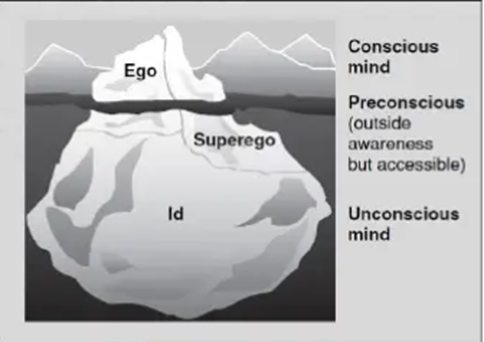
Freud suggested a similarity about the mind.
फ्रायड ने मन के बारे में एक समानता बताई।
He said that the mind is like an iceberg in the ocean, floating 10% above the water and 90% below.
उन्होंने कहा कि मन समुद्र में तैरते हुए एक हिमखंड की तरह है, जिसका 10% हिस्सा पानी के ऊपर और 90% हिस्सा पानी के नीचे होता है।
Freud said that unconscious mind makes up the vast majority of our mind.
फ्रायड ने कहा कि अचेतन मन हमारे मन का बहुत बड़ा हिस्सा बनाता है।
In Freud’s view, only about 10% of our behaviours are caused by conscious awareness about 90% are produced by unconscious factors.
फ्रायड के अनुसार, हमारे व्यवहार का केवल लगभग 10% भाग चेतन जागरूकता से होता है जबकि लगभग 90% अचेतन कारकों से उत्पन्न होता है।
According to psychoanalytic theory, most of what controls our behaviours, thoughts, and feelings is unknown to our aware minds.
मनोविश्लेषणात्मक सिद्धांत के अनुसार, हमारे व्यवहार, विचार और भावनाओं को नियंत्रित करने वाली अधिकांश चीजें हमारे चेतन मन को ज्ञात नहीं होती हैं।
Normally, the unconscious guides us.
सामान्यतः अचेतन मन हमें मार्गदर्शन करता है।
Freud said that the mind could be divided into three abstract categories.
फ्रायड ने कहा कि मन को तीन अमूर्त भागों में विभाजित किया जा सकता है।
These are the id, the ego, and the superego.
ये हैं—इड, ईगो और सुपरेगो।
1. The id:
इड:
Latin for the term “it,” this division of the mind includes our basic instincts, inborn nature, and animalistic urges.
“इट” शब्द के लिए लैटिन भाषा से लिया गया यह मन का भाग हमारे मूल प्रवृत्तियों, जन्मजात स्वभाव और पशु जैसे इच्छाओं को शामिल करता है।
Freud said that the id is totally unconscious, that we are unaware of its workings.
फ्रायड ने कहा कि इड पूरी तरह अचेतन होता है और हम इसके कार्यों से अनजान रहते हैं।
The id is not rational; it imagines, dreams, and invents things to get us what we want.
इड तर्कसंगत नहीं होता; यह हमारी इच्छाओं को पूरा करने के लिए कल्पना करता है, सपने देखता है और चीजें बनाता है।
Freud said that the id operates according to the pleasure principle it aims toward pleasurable things and away from painful things.
फ्रायड ने कहा कि इड आनंद सिद्धांत पर कार्य करता है, यह सुखद चीजों की ओर जाता है और दुखद चीजों से दूर रहता है।
The id aims to satisfy our biological urges and drives.
इड का उद्देश्य हमारी जैविक इच्छाओं और प्रवृत्तियों को संतुष्ट करना होता है।
It includes feelings of hunger, thirst and other natural body desires aimed at deriving pleasure.
इसमें भूख, प्यास और अन्य शारीरिक इच्छाएँ शामिल होती हैं जो आनंद प्राप्त करने के लिए होती हैं।
2. The ego:
ईगो:
Greek and Latin for “I,” this personality structure begins developing in childhood and can be interpreted as the “self.”
“मैं” के लिए ग्रीक और लैटिन से लिया गया यह व्यक्तित्व का भाग बचपन में विकसित होना शुरू होता है और इसे “स्वयं” के रूप में समझा जा सकता है।
The ego is partly conscious and partly unconscious.
ईगो आंशिक रूप से चेतन और आंशिक रूप से अचेतन होता है।
The ego operates according to the reality principle; that is, it attempts to help the id get what it wants by judging the difference between real and imaginary.
ईगो वास्तविकता सिद्धांत पर कार्य करता है; अर्थात यह इड को उसकी इच्छाएँ पूरी करने में मदद करता है, वास्तविक और काल्पनिक के बीच अंतर समझकर।
If a person is hungry, the id might begin to imagine food and even dream about food.
यदि कोई व्यक्ति भूखा है, तो इड भोजन की कल्पना करने लगता है और भोजन के सपने भी देख सकता है।
(The id is not rational.)
(इड तर्कसंगत नहीं होता।)
The ego, however, will try to determine how to get some real food.
लेकिन ईगो यह तय करने की कोशिश करेगा कि वास्तविक भोजन कैसे प्राप्त किया जाए।
The ego helps a person satisfy needs through reality.
ईगो व्यक्ति को वास्तविकता के माध्यम से अपनी आवश्यकताओं को पूरा करने में मदद करता है।
3. The superego: सुपरेगो:
This term means “above the ego,” and includes the moral ideas that a person learns within the family and society.
इस शब्द का अर्थ है “ईगो के ऊपर”, और इसमें वे नैतिक विचार शामिल होते हैं जो व्यक्ति परिवार और समाज से सीखता है।
The superego gives people feelings of pride when they do something correct (the ego ideal) and feelings of guilt when they do something they consider to be morally wrong (the conscience).
सुपरेगो व्यक्ति को सही कार्य करने पर गर्व की भावना (ईगो आदर्श) और गलत कार्य करने पर अपराधबोध (विवेक) की भावना देता है।
The superego, like the ego, is partly conscious and partly unconscious.
सुपरेगो भी ईगो की तरह आंशिक रूप से चेतन और आंशिक रूप से अचेतन होता है।
The superego is a child’s moral barometer, and it creates feelings of pride and guilt according to the beliefs that have been learned within the family and the culture.
सुपरेगो बच्चे का नैतिक मापक होता है और यह परिवार और संस्कृति से सीखे गए विश्वासों के आधार पर गर्व और अपराधबोध की भावनाएँ उत्पन्न करता है।
Freud theorized that healthy personality development requires a balance between the id and the superego.
फ्रायड ने सिद्धांत दिया कि स्वस्थ व्यक्तित्व विकास के लिए इड और सुपरेगो के बीच संतुलन आवश्यक है।
These two divisions of the mind are naturally at conflict with one another: The id attempts to satisfy animal, biological urges, while the superego preaches patience and restraint.
मन के ये दोनों भाग स्वाभाविक रूप से एक-दूसरे के विरोध में होते हैं: इड पशु जैसे जैविक इच्छाओं को संतुष्ट करने की कोशिश करता है, जबकि सुपरेगो धैर्य और संयम की बात करता है।
The struggle between these two is an example of intrapsychic conflict conflict within the mind.
इन दोनों के बीच संघर्ष मानसिक आंतरिक संघर्ष (इंट्रासाइचिक कॉन्फ्लिक्ट) का उदाहरण है, जो मन के भीतर होता है।
According to psychoanalytic theory, defense mechanisms are automatic (unconscious) reactions to the fear that the id’s desires will overwhelm the ego.
मनोविश्लेषणात्मक सिद्धांत के अनुसार, रक्षा तंत्र (डिफेंस मैकेनिज्म) स्वचालित (अचेतन) प्रतिक्रियाएँ होती हैं जो इस डर से उत्पन्न होती हैं कि इड की इच्छाएँ ईगो को नियंत्रित कर लेंगी।
Freud believed that a healthy personality was one in which the id’s demands are met but also the superego is satisfied in making the person feel proud and not overwhelmed by guilt.
फ्रायड का मानना था कि स्वस्थ व्यक्तित्व वह है जिसमें इड की इच्छाएँ पूरी हों और साथ ही सुपरेगो भी संतुष्ट हो ताकि व्यक्ति को गर्व महसूस हो और वह अपराधबोध से ग्रस्त न हो।
If the id is too strong, a person will be rude, overbearing, selfish, and animalistic.
यदि इड बहुत मजबूत हो जाता है, तो व्यक्ति रूखा, दबाव डालने वाला, स्वार्थी और पशु जैसा व्यवहार करने लगता है।
If the superego is too strong, a person is constantly worried, nervous, and full of guilt and anxiety and is always repressing the id’s desires.
यदि सुपरेगो बहुत मजबूत हो जाता है, तो व्यक्ति हमेशा चिंतित, घबराया हुआ और अपराधबोध व चिंता से भरा रहता है तथा हमेशा इड की इच्छाओं को दबाता रहता है।
An overly strong id makes one a psychopath, lacking a conscience, or an ogre, selfishly meeting one’s needs without concern for others.
बहुत अधिक मजबूत इड व्यक्ति को मनोरोगी बना देता है, जिसमें विवेक की कमी होती है, या ऐसा व्यक्ति जो दूसरों की परवाह किए बिना अपनी आवश्यकताओं को स्वार्थी तरीके से पूरा करता है।
An overly strong superego, on the other hand, makes one a worrier, a neurotic, so overwhelmed by guilt that it is difficult to get satisfaction.
दूसरी ओर, बहुत अधिक मजबूत सुपरेगो व्यक्ति को चिंतित और न्यूरोटिक बना देता है, जो इतना अपराधबोध से ग्रस्त होता है कि उसे संतुष्टि प्राप्त करना कठिन हो जाता है।
ERIKSON THEORY:
एरिक्सन का सिद्धांत:
Erikson converted Freud’s emphasis to a focus on social relationships into eight psychosocial stages.
एरिक्सन ने फ्रायड के जोर को सामाजिक संबंधों पर केंद्रित करते हुए इसे आठ मनोसामाजिक चरणों में विभाजित किया।
These stages became known as the Eight Ages of Man.
इन चरणों को मनुष्य के आठ आयु चरणों के रूप में जाना गया।
(As you know, at that time in history, the word man was used to apply to all human beings.)
(जैसा कि आप जानते हैं, उस समय इतिहास में “man” शब्द का उपयोग सभी मनुष्यों के लिए किया जाता था।)
Each of Erikson’s eight stages was described as a time of crisis a time when the personality would go one way or the other.
एरिक्सन के प्रत्येक आठ चरण को संकट का समय बताया गया है, जब व्यक्तित्व एक दिशा या दूसरी दिशा में विकसित होता है।
For example, you’ve likely heard of the identity crisis.
उदाहरण के लिए, आपने पहचान संकट (identity crisis) के बारे में सुना होगा।
Erikson theorized that during adolescence, we all face a crisis of figuring out who we are.
एरिक्सन के अनुसार किशोरावस्था में हम सभी यह जानने के संकट का सामना करते हैं कि हम कौन हैं।
Each of the stages has this either-or quality.
प्रत्येक चरण में यह या तो-या का गुण होता है।
Erikson’s Psychosocial Stages: (Eight Ages of Man)
एरिक्सन के मनोसामाजिक चरण: (मनुष्य के आठ आयु चरण)
1. Infant
शिशु अवस्था
Trust versus Mistrust
विश्वास बनाम अविश्वास
Babies whose needs are met develop a feeling of trust for the environment.
जिन शिशुओं की आवश्यकताएँ पूरी होती हैं, उनमें वातावरण के प्रति विश्वास विकसित होता है।
If infants have frustration and deprivation, they learn a basic mistrust for the world that will stick throughout life.
यदि शिशु निराशा और अभाव का अनुभव करते हैं, तो वे दुनिया के प्रति मूलभूत अविश्वास सीख लेते हैं जो जीवनभर बना रहता है।
2. Toddler
बाल्यावस्था (छोटा बच्चा)
Autonomy versus Shame
स्वायत्तता बनाम शर्म
When toddlers learn to act independently and to control and doubt their bodies (toilet training, walking, etc.), they learn self confidence and a feeling of autonomy.
जब छोटे बच्चे स्वतंत्र रूप से कार्य करना और अपने शरीर को नियंत्रित करना सीखते हैं (जैसे टॉयलेट ट्रेनिंग, चलना आदि), तो उनमें आत्मविश्वास और स्वायत्तता की भावना विकसित होती है।
Failure leads to feelings of inadequacy and therefore a sense of basic shame and doubt.
असफलता से हीनता की भावना उत्पन्न होती है और इसके परिणामस्वरूप मूलभूत शर्म और संदेह की भावना पैदा होती है।
3. Preschool
प्री-स्कूल अवस्था
Initiative versus Guilt
पहल बनाम अपराधबोध
The preschooler is ready to take action in play, in imagination and in running his or her life.
प्री-स्कूल का बच्चा खेल, कल्पना और अपने जीवन को चलाने में पहल करने के लिए तैयार होता है।
Success here leads to good self-esteem; problems lead to feelings of guilt.
यहाँ सफलता से अच्छा आत्म-सम्मान विकसित होता है; समस्याएँ अपराधबोध की भावना उत्पन्न करती हैं।
4. Early school age
प्रारंभिक स्कूल आयु
Industry versus Inferiority
कर्मठता बनाम हीनता
The school-aged child is ready for learning many new skills and, if successful, will develop a sense of industry being good at things.
स्कूल जाने वाला बच्चा कई नई कौशल सीखने के लिए तैयार होता है और यदि सफल होता है तो उसमें कार्यकुशलता की भावना विकसित होती है।
Failures at this stage result in a deep sense of being no good, of being inferior to others a feeling that might carry into adulthood.
इस चरण में असफलता से गहरी हीनता की भावना उत्पन्न होती है, जो वयस्कता तक बनी रह सकती है।
5. Adolescent
किशोरावस्था
Identity versus Role of confusion
पहचान बनाम भूमिका भ्रम
An adolescent is beginning to think abstractly and can conceptualize his or her self-identity and personality.
किशोर अमूर्त रूप से सोचना शुरू करता है और अपनी पहचान और व्यक्तित्व की अवधारणा बना सकता है।
The adolescent begins to consider questions of identity such as: Who should I be? What should I value? And what interests should I have?
किशोर पहचान से जुड़े प्रश्नों पर विचार करना शुरू करता है जैसे: मैं कौन बनूं? मुझे क्या महत्व देना चाहिए? और मेरी रुचियाँ क्या होनी चाहिए?
The teen must answer these to develop a good sense of self-identity.
किशोर को अच्छी आत्म-पहचान विकसित करने के लिए इन प्रश्नों के उत्तर देने होते हैं।
Exploration of various roles and personalities is common in this stage.
इस चरण में विभिन्न भूमिकाओं और व्यक्तित्वों का अन्वेषण सामान्य होता है।
6. Young adult
युवा अवस्था
Intimacy versus Isolation
निकटता बनाम एकाकीपन
A young adult faces the challenge of developing close emotional relationships with other people.
युवा व्यक्ति को अन्य लोगों के साथ गहरे भावनात्मक संबंध विकसित करने की चुनौती का सामना करना पड़ता है।
Here the term intimate does not mean sexuality, but social and emotional connections with others.
यहाँ “इंटिमेट” शब्द का अर्थ यौन संबंध नहीं बल्कि सामाजिक और भावनात्मक जुड़ाव है।
The opposite result, for those who do not develop a sense of intimacy, is to become isolated from social contact.
जो लोग निकटता की भावना विकसित नहीं कर पाते, वे सामाजिक संपर्क से अलग हो जाते हैं।
7. Middle-aged adult
मध्य आयु अवस्था
Generativity versus Stagnation
उत्पादकता बनाम ठहराव
Middle-aged adults feel an urgency to leave a mark on the world, to generate something of lasting value and worth.
मध्य आयु के लोग दुनिया पर अपनी छाप छोड़ने और कुछ स्थायी मूल्यवान बनाने की इच्छा महसूस करते हैं।
Finding a purpose in life is a central theme.
जीवन में उद्देश्य खोजना मुख्य विषय होता है।
To fail at generating something significant means a person becomes stagnant and stops moving forward; this person may become selfish and self-absorbed.
कुछ महत्वपूर्ण उत्पन्न करने में असफलता से व्यक्ति ठहर जाता है और आगे बढ़ना बंद कर देता है; वह स्वार्थी और आत्मकेंद्रित हो सकता है।
8. Old adult
वृद्धावस्था
Integrity versus Despair
अखंडता बनाम निराशा
In old age, it is common to look back on life and reflect on what was accomplished.
वृद्धावस्था में लोग अपने जीवन को पीछे मुड़कर देखते हैं और यह विचार करते हैं कि उन्होंने क्या हासिल किया।
People who feel good about what they have done build a sense of integrity.
जो लोग अपने कार्यों से संतुष्ट होते हैं, उनमें अखंडता की भावना विकसित होती है।
For those whose evaluations are not so good, there is despair, the feeling of regret and remorse for the life they led.
जिनका मूल्यांकन अच्छा नहीं होता, उनमें निराशा, पछतावा और जीवन के लिए दुख की भावना उत्पन्न होती है।
DOWNLOD PDF OPEN
AGEXT- 121 Notes PDF PERSONALITY DEVELOPMENT 6th Deans Download